How to Buy a Plus Size Masculine Suit for Women

Finding a plus size masculine suit for women can be surprisingly difficult.
Above a size 14 or 16, many off-the-rack suits rely on a standard pattern that has simply been scaled up. But bodies don't scale up proportionally.
The chest might fit while the hips don't. The trousers might fit through the waist but pull across the seat or thigh. The shoulder can sit too far out, while the jacket is too short or too long.
Then there's the other problem: menswear isn't cut for a woman's body, while much of womenswear is designed around a traditionally feminine silhouette.
If you want a masculine, androgynous or traditionally tailored look, finding the right suit can feel like choosing between two imperfect options.
The alternative is to have a suit made around your body and the silhouette you actually want.
This guide explains how to buy a plus size masculine suit for women, including when to alter an existing suit, when to have one made, what happens during a consultation and fittings, and what to consider if your body changes.
Should You Alter a Suit or Have One Made?
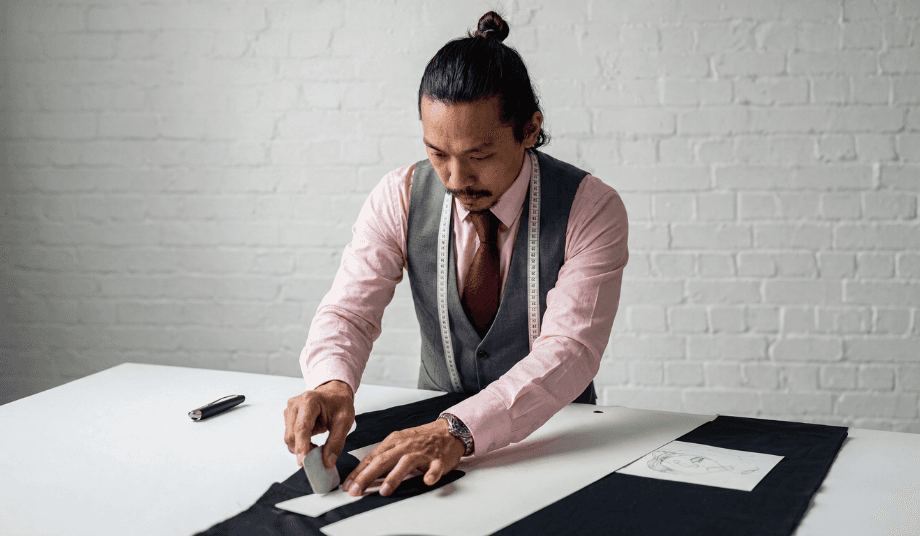
There are two ways to get a better-fitting suit: alter an existing suit or have one made from scratch.
They solve different problems.
When should you alter a suit?
Alterations work well when the underlying suit already fits your body reasonably well and only needs adjustments.
For example:
The sleeves are too long.
The trouser hem needs shortening.
The jacket needs taking in slightly at the waist.
The trousers need a small adjustment at the waist.
These are relatively straightforward changes.
But alterations have limits.
If the shoulder seam sits significantly beyond your natural shoulder, or the jacket is fundamentally the wrong shape for your chest and hips, an alteration can't completely rebuild the garment.
Similarly, if the trousers don't have enough room through the hip, there may simply not be enough fabric available to let them out.
When should you have a suit made?
If a suit consistently fits one part of your body and fails somewhere else, made-to-measure or bespoke tailoring is worth considering.
Instead of starting with a predetermined size, the garment is developed around your measurements and the silhouette you want.
This is particularly useful if you have proportions that don't correspond neatly to standard sizing.
Read more: How to Choose the Right Tailor for Your Bespoke Suit
Made-to-Measure vs Bespoke: What's the Difference?

You'll often see the terms made-to-measure and bespoke used interchangeably, but they're not quite the same.
Made-to-measure
A standard pattern is adjusted to your measurements.
It can provide a much better fit than off-the-rack clothing, while still working from an existing pattern.
Bespoke
A new pattern is created specifically for you.
The garment is developed around your measurements, posture, proportions and desired silhouette rather than adapting a standard size.
For someone who has repeatedly struggled with standard sizing, that distinction can be important.
At Isadora Nim, suits are developed specifically for the individual rather than simply scaling a standard size up.
The goal isn't to make a standard suit fit your body. It's to make the suit fit your body from the beginning.
Read more: Custom Women's Suit Vs Ready Made (Off The Rack)
What Happens at a Custom Suit Consultation?
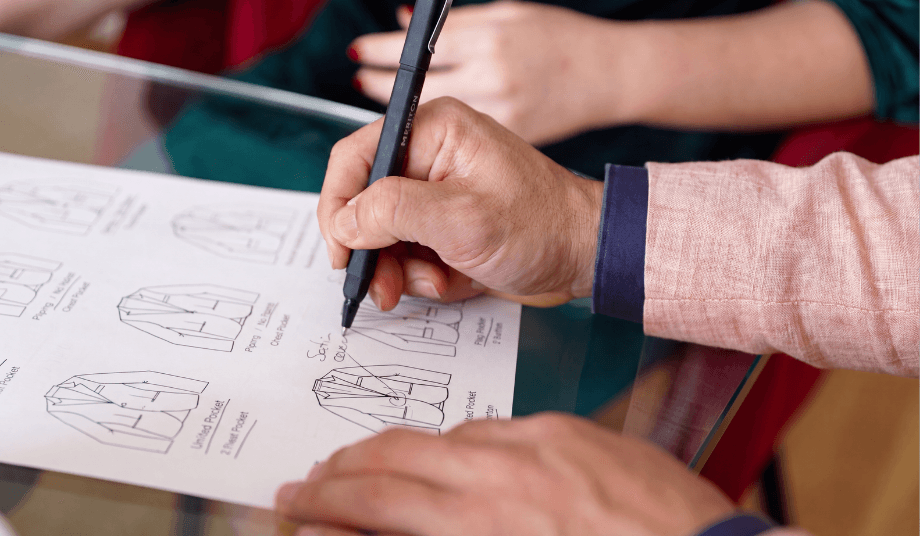
The first step is a consultation.
At Isadora Nim, the initial conversation is free and there's no obligation to proceed.
The consultation is about understanding what you actually want from the suit.
You'll discuss:
What you're wearing the suit for.
Your preferred masculine or androgynous silhouette.
Previous problems you've experienced with suits.
How formal or relaxed you want the finished garment to be.
Your timeline.
Jacket and trouser proportions.
Any particular details you want included.
If you've struggled with suits in the past, bring those frustrations to the appointment.
Perhaps your jackets always feel tight across the chest.
Perhaps the shoulders never sit correctly.
Perhaps trousers fit your waist but pull across your hips.
Those aren't minor details. They're useful information about how your next suit needs to be constructed.
What Happens During the Fittings?
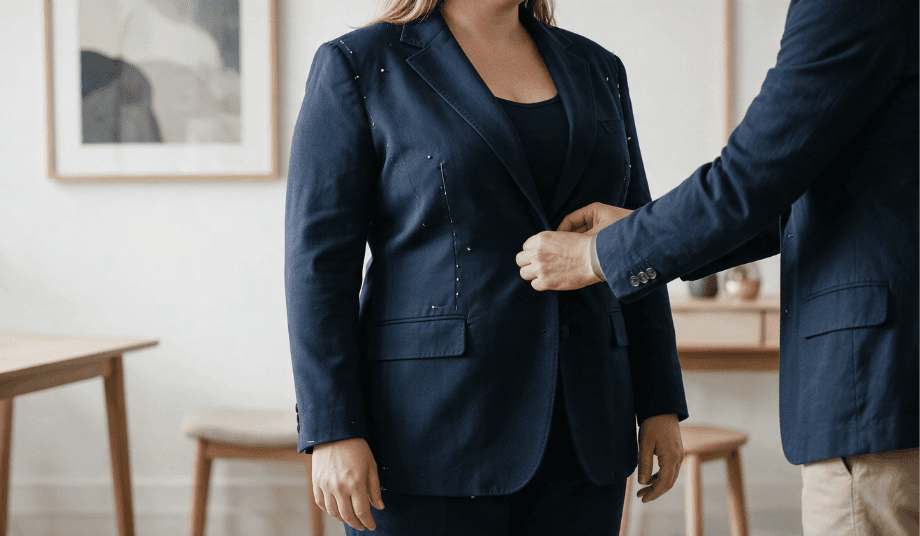
A custom suit isn't finished after your measurements are taken.
The fitting process allows the pattern and garment to be assessed on your actual body.
At Isadora Nim, the process runs across three stages.
1. Initial consultation and measurements
This is where the fabric, design and measurements are established.
2. Second fitting
You'll try on the completed suit.
This allows Peter to assess how the garment behaves on your body rather than relying solely on measurements.
You'll move, sit, reach and walk while the fit is assessed.
This is particularly important for plus size tailoring because standard size charts can't account for every body's proportions.
3. Final collection
Once the final adjustments have been completed, you collect the finished suit.
The result should feel like a garment designed for you—not a larger version of something designed for somebody else.
How Long Does a Custom Suit Take?
Timing depends on the type of appointment and the production schedule.
For regular studio service, allow approximately 8-12 weeks.
Trunk-show appointments can take approximately 12 weeks, depending on travel and scheduling.
If you're buying a suit for a wedding, formal event or other fixed date, it's best to allow plenty of time.
As a general rule, don't leave a custom suit until the last few weeks before your event.
How to Build an Outfit Around Your Suit

Once you've invested in the suit, don't feel limited to wearing the jacket and trousers together.
A good masculine wardrobe can be built around a small number of tailored pieces.
For more outfit ideas, see our guide to plus size tomboy outfits.
The Bottom Line: Your Suit Should Fit You
If you've spent years buying suits where the chest fits but the hips don't, or where the shoulders sit too far out, the problem may not be your body.
It may be the pattern.
Standard sizing has to make assumptions about proportions. Your body doesn't have to conform to those assumptions.
A masculine suit can have all the characteristics you want—structured shoulders, strong lapels, wide-leg trousers, a higher rise, double-breasted construction or a traditional tuxedo silhouette—while still being made around your individual body.
The objective isn't to find a larger size.
It's to find the right fit.
Looking for a Plus Size Masculine Suit?
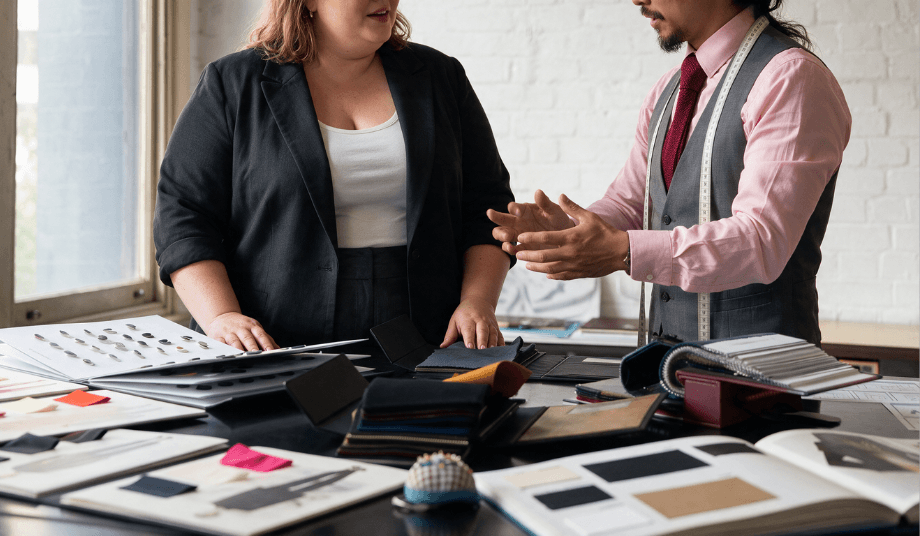
At Isadora Nim, we create bespoke suits for women who want clothing that reflects their individual style and proportions.
Whether you're looking for a classic masculine suit, an androgynous silhouette, a double-breasted suit, a tuxedo or something entirely your own, the process begins with a conversation about what you want to wear and how you want it to fit.
Book a free consultation at Isadora Nim.
No pressure to buy. Just a conversation about what you're looking for.