How Custom Suits Actually Fix Athletic Build Fit?
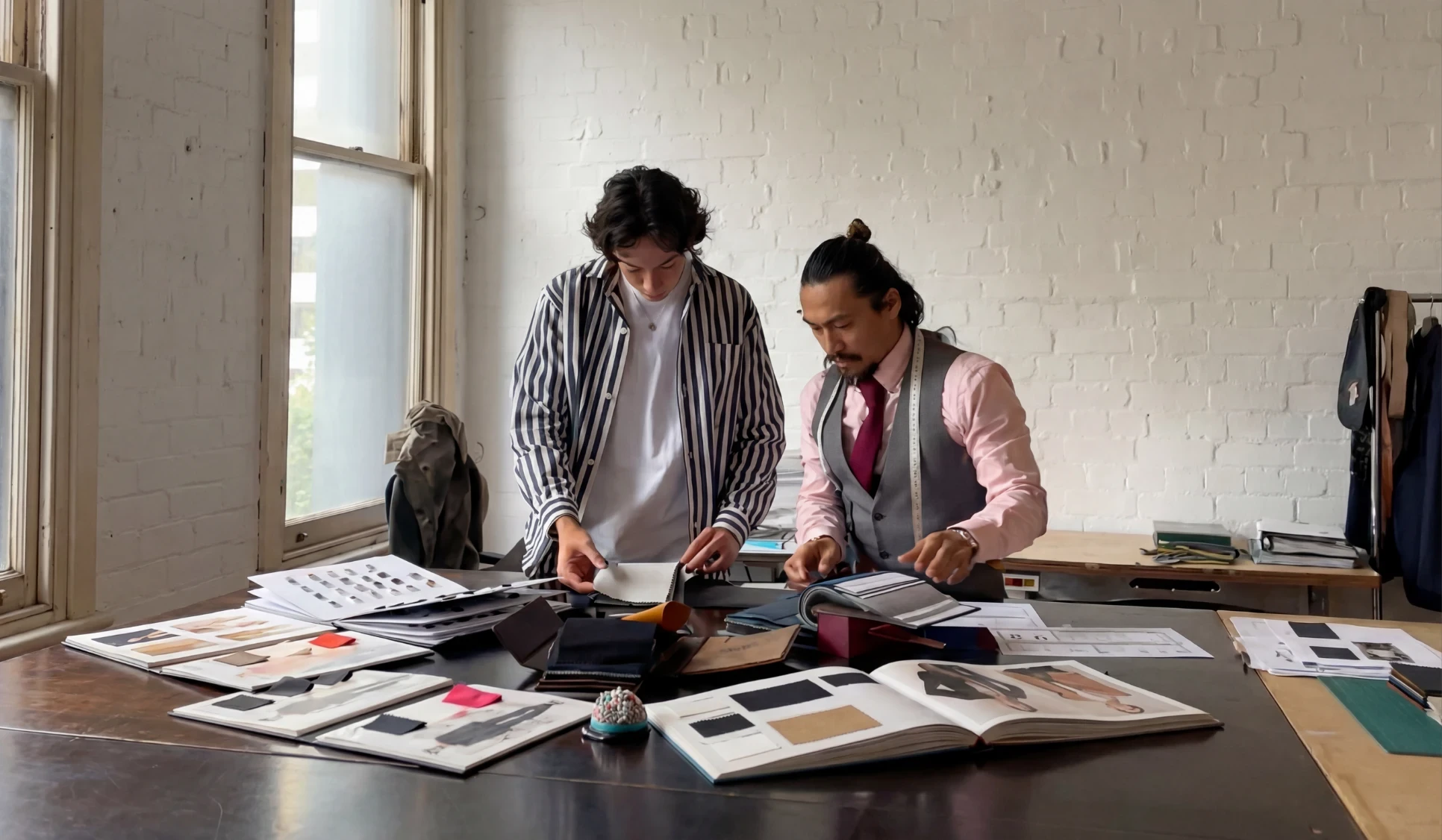
Made to measure takes 20+ measurements instead of 3, but the number matters less than the changes in our approach. Standard sizing treats your body as a collection of ratios. Bust size dictates shoulder width, which determines armhole circumference, which calculates back width. Your entire garment gets built from formulas designed for an imaginary average woman. Made to measure rejects this premise completely. Your body isn't a mathematical equation. Every dimension exists independently, measured directly, then translated into a pattern drawn specifically for your proportions.
At Isadora Nim, this shift from calculation to precision is where transformation happens.
Why Does Standard Sizing Only Take 3 Measurements?
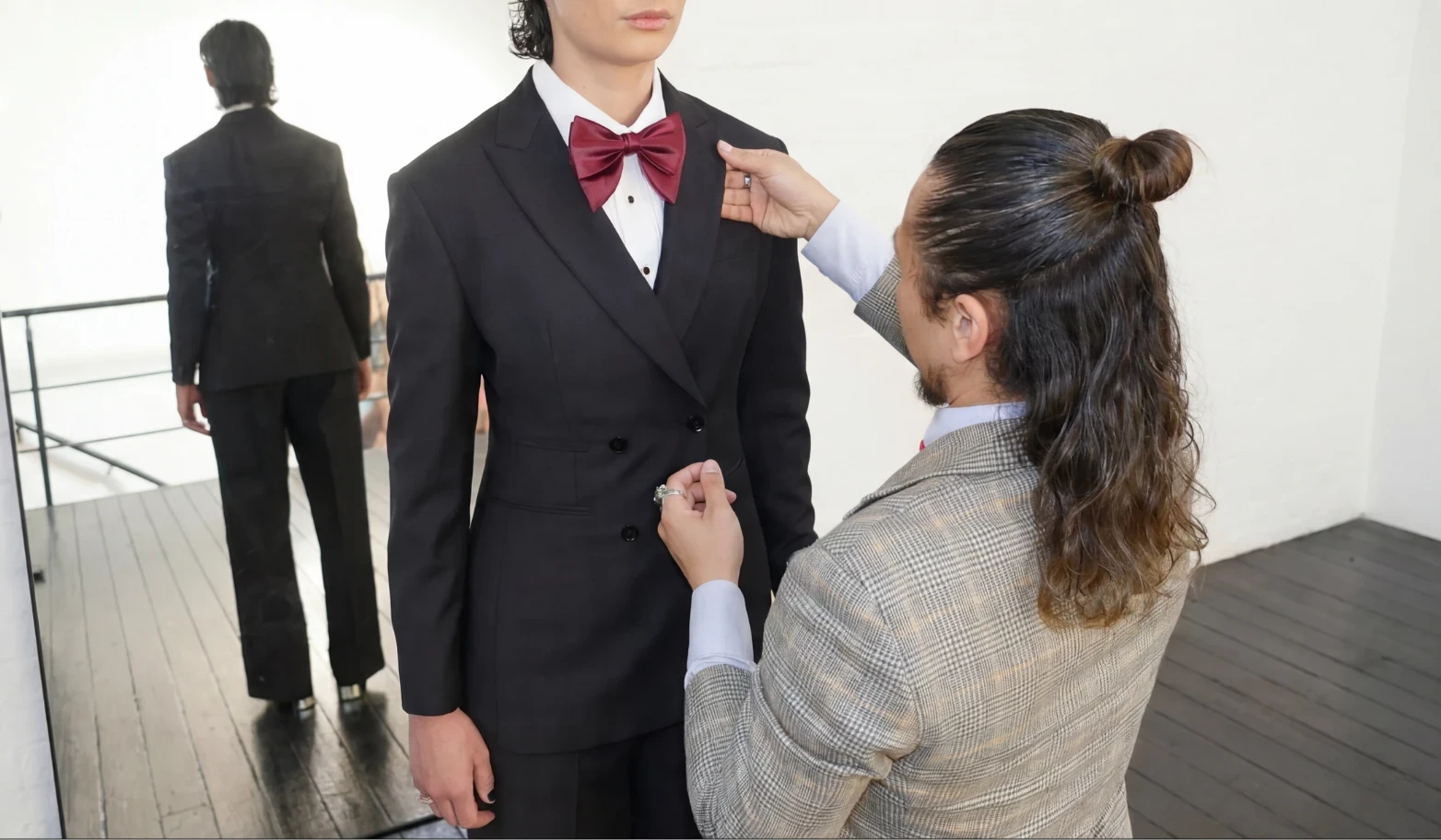
The ready-to-wear industry operates on a fundamental truth: one pattern must fit thousands of women. This requirement forces standardization. They discovered that most women's bodies follow certain proportional relationships. Measure bust at 38 inches, and statistically, shoulders will cluster around 15 inches wide, hips around 40 inches, waist around 30 inches.
So they built an entire sizing system on probability. Size 12 isn't just a bust measurement - it's a complete set of assumed proportions that work for the statistical majority. The system succeeds brilliantly at clothing 60-70% of women reasonably well. It fails the remaining 30-40% completely.
Athletic builds fall squarely in that 30-40%. Your shoulders break the expected ratio to your bust. Your waist-hip difference doesn't match the assumed curve. Your back width exceeds what formulas predict. Not one assumption holds true, so the entire calculated pattern collapses.
The industry knows this. They accept it as the cost of mass production. You're expected to accept it as the cost of having a body that doesn't conform.
Read more: Why Your Suits Never Fit: The Athletic Build Problem
How Does Made to Measure Actually Create Shape on Athletic Builds?
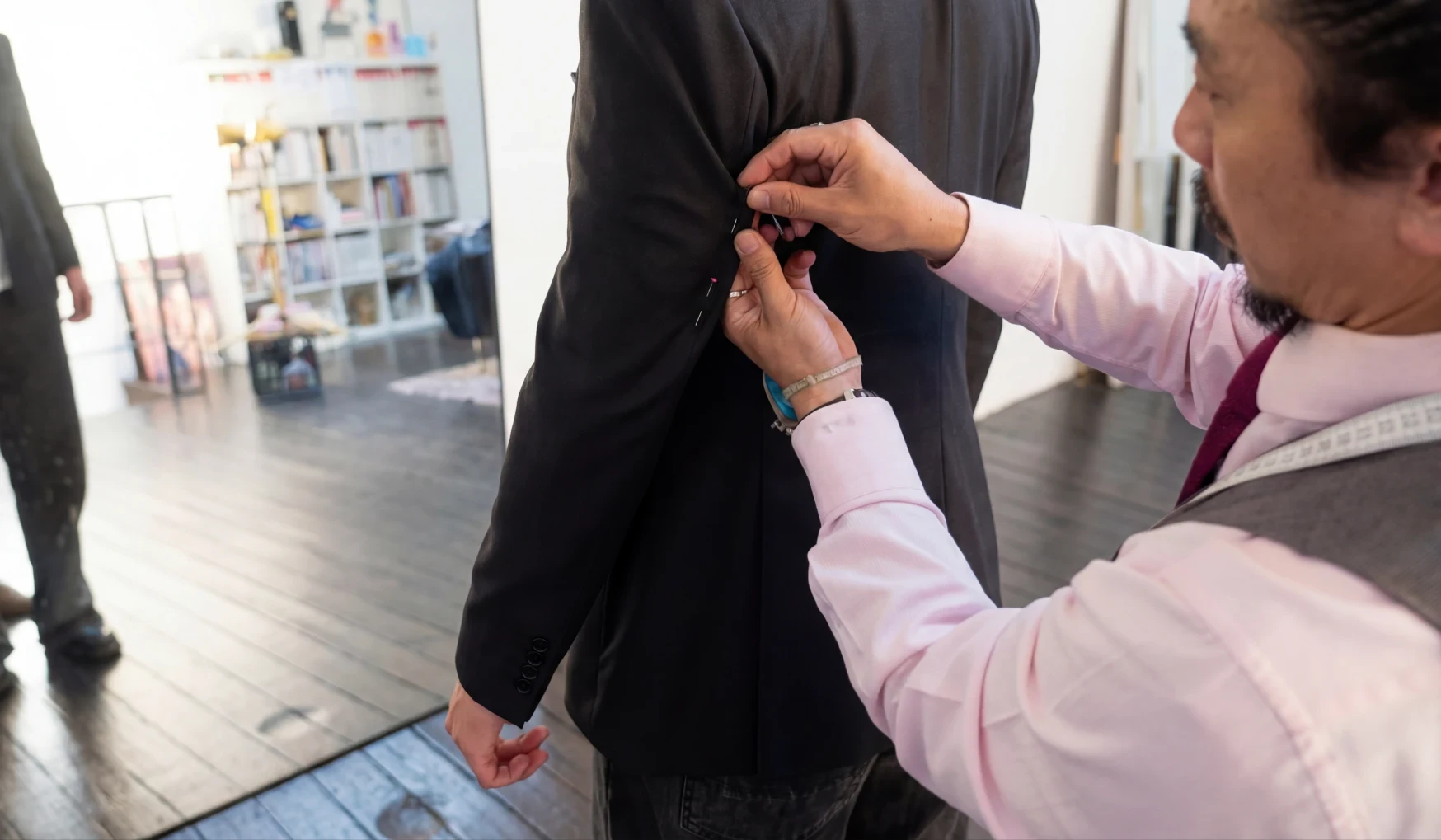
Made to measure solves the athletic build problem by measuring three things standard sizing calculates incorrectly, then using those measurements to build shape where your body doesn't naturally have curves.
Shoulder Slope: The Angle That Determines Everything
The angle from your neck to shoulder end. Standard patterns use one angle per size. Your actual slope might be steeper or flatter. Jesse Wardlaw's shoulders run more horizontally than patterns assumed. This single angle difference explained years of jackets that fit in width but felt wrong. The seams sat in the wrong place because the pattern expected her shoulders to drop more steeply than they actually do.
When shoulder slope gets measured correctly, everything else can position properly. The armhole sits where it should. The sleeve hangs at the right angle. The entire shoulder construction works with your body instead of fighting it.
Armhole Circumference: Freedom vs Restriction
The full circle where the sleeve attaches. Standard Size 12 gives you 36cm. Athletic builds need 40-42cm. Those 4-6 centimeters determine whether you can raise your arms naturally or feel fabric cutting into your underarms.
You've probably modified your movements without realizing it. You don't reach as far, don't lift as high. Your brain learned to avoid triggering the restriction. Proper armhole circumference means you stop modifying. You move naturally because the jacket was built for how your body actually moves.
Back Width: Why Reaching Forward Pulls Everything
Distance between shoulder blades at their widest point. This explains why when you reach forward the entire jacket pulls tight across your back. Standard patterns calculate this from bust size. Athletic backs from swimming, rowing, lifting need substantially more width than bust measurements predict.
These three measurements get taken independently. Then the pattern gets drawn for your actual proportions.
Want to experience this difference? Our Sydney trunk shows demonstrate exactly how construction creates definition on athletic builds.
Reserve your one-hour consultation
How Create Waist Shape on Straight Bodies?
The answer is understanding how tailors create shape. It's not about the body having curves. It's about construction creating them.
Darts
Triangular fabric folds - remove excess material to create shape. Standard patterns position darts assuming bust and hip curves. Your darts get positioned for your actual body contours. They might start higher on the bust, angle differently for straighter torsos, create shape where you actually narrow instead of where patterns assume.
Suppression
Fabric removed between bust and waist - gets calculated from your actual shoulder-to-waist difference. Not the 8-10 inches standard patterns expect. Your 3-4 inches. The pattern removes the right amount of fabric for your body, not an imaginary average.
Button placement
Amplifies the effect. Single button at your natural waist creates a focal point. The eye goes to the narrowest point because the button directs it there.
Jesse's jacket creates clear waist definition. The construction built it through dart positioning and moderate suppression appropriate for her 4-inch waist-hip difference. Not excessive hourglass shaping for curves she doesn't have. Definition that makes sense for her actual build.
Someone looking at her sees a defined waist. She looks like herself, enhanced. Not wearing someone else's curves.
What Fabric Properties Actually Matter?
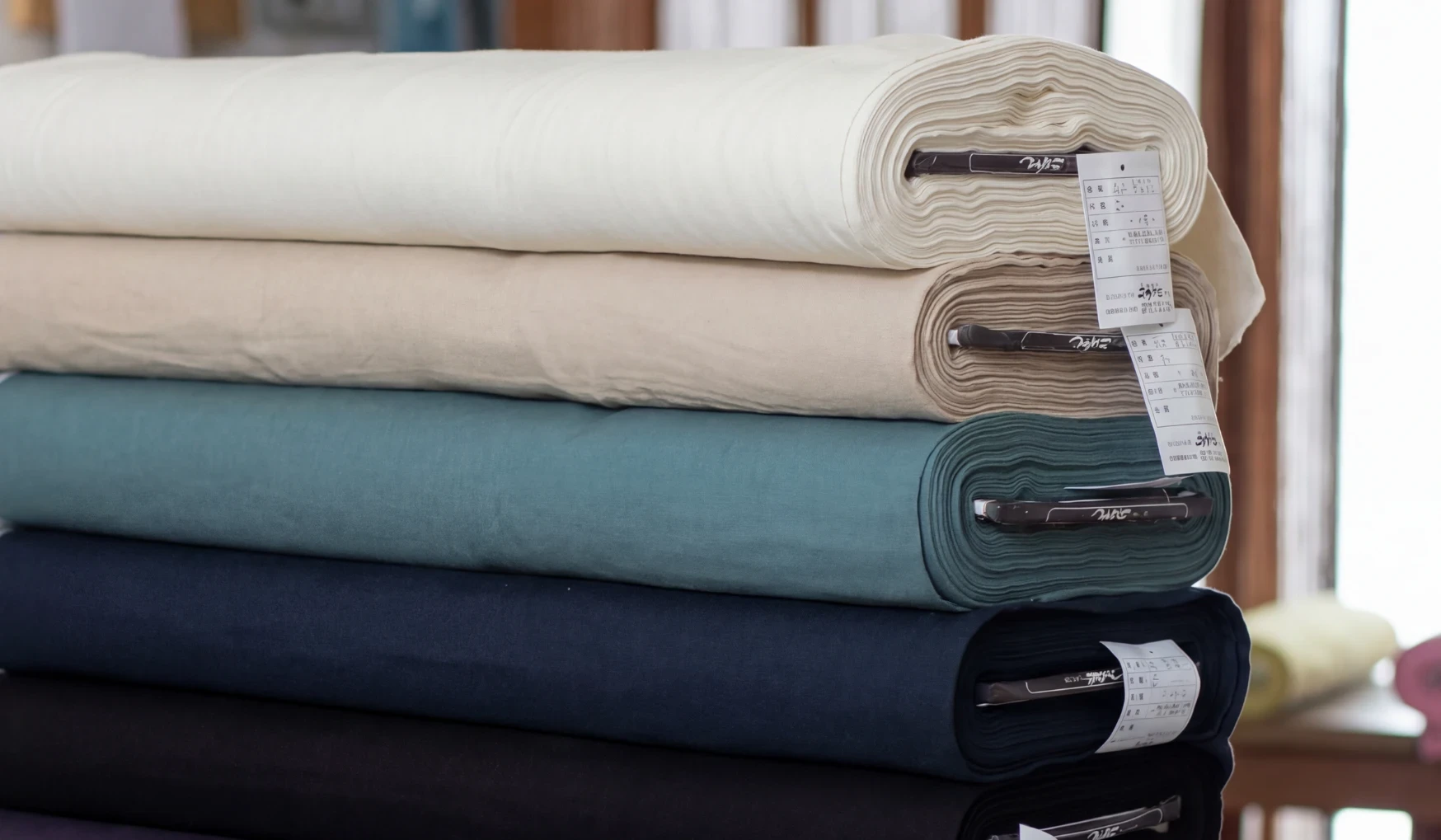
Fabric selection for athletic builds requires understanding three properties that work together: structure, weight, and flexibility.
Structure
Refers to how well fabric holds its shape. This matters profoundly for athletic builds because you're asking the fabric to create a silhouette on a straighter body. Structured fabrics maintain the lines the tailor built into the pattern - the waist suppression, the shoulder line, the overall shape. When you move, the fabric flexes, then returns to its intended form.
Draped, fluid fabrics work beautifully on bodies with pronounced curves because they have curves to drape over. The fabric follows the body's existing shape. On athletic builds with straighter torsos, draped fabrics simply hang straight down from the shoulders. All the careful shaping built into the pattern disappears because the fabric can't hold those lines.
Weight
Provides substance. Mid-weight fabrics (270-320 grams) give the cloth enough body to maintain structure without feeling heavy or stiff. Too light and the fabric looks insubstantial on broader frames. Too heavy and it feels restrictive, fighting the very flexibility athletic builds need.
Flexibility
Seems counterintuitive after discussing structure. The balance matters tremendously. Pure rigidity restricts movement. Pure flexibility can't hold shape. The sweet spot for most athletic builds is structured fabric with minimal stretch - around 2% elastane.
This combination maintains the pattern's intended silhouette while allowing natural movement in shoulders, arms, and back. The stretch isn't dramatic. You wouldn't notice it standing still. But when you reach, lift, move, that 2% provides just enough give to accommodate athletic movement without compromising the jacket's lines.
At Isadora Nim trunk shows, you'll see fabric samples ranging from lightweight linen to structured wool, feel the difference in hand, and understand which properties work best for your frame and lifestyle. It's education first, decision later.
Book your Sydney trunk show consultation
What Design Choices Work With Athletic Proportions?
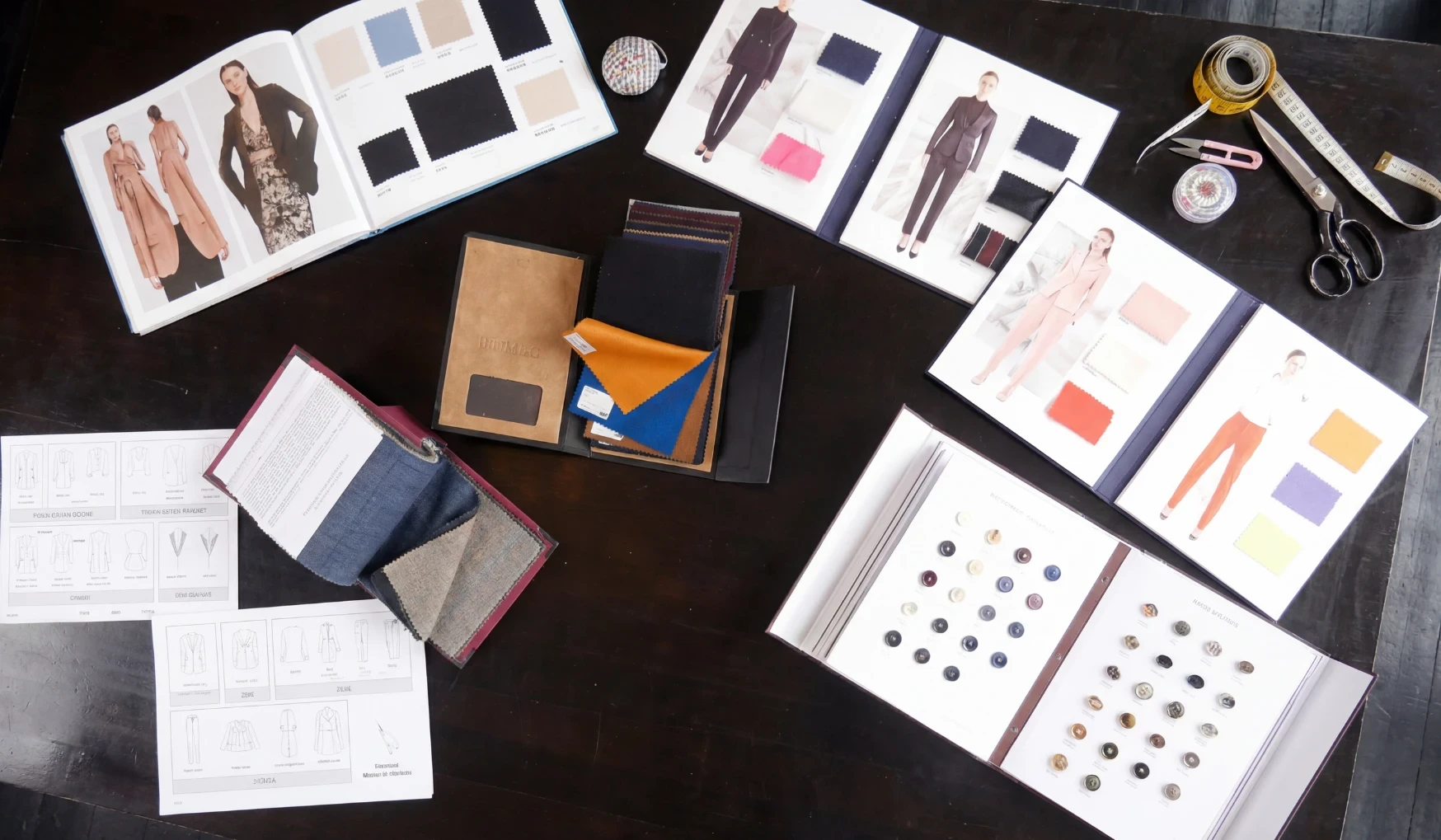
Design choices for athletic builds focus on enhancing what already exists rather than creating what doesn't.
Single-breasted jackets
Create vertical lines through the center opening. The eye travels up and down rather than across. This prevents adding visual width to already broad shoulders. Jesse chose a double-breasted jacket. The structured lines create vertical emphasis while the button placement at her natural waist focuses attention where definition exists. Simple, effective, and tailored to her athletic proportions
Double-breasted jackets
Add horizontal structure across the chest with multiple buttons creating width. Athletic builds can absolutely carry this style. Your shoulder width provides the frame to balance the added structure. The question is whether you want to emphasize width or not. Choose double-breasted when you want maximum presence and commanding silhouette.
Lapel width and style
Affects how the jacket frames your face and shoulders. Notched lapels (the classic V-cut) work universally for athletic builds. The diagonal line doesn't compete with shoulder width. Peak lapels point upward and outward, drawing attention to the shoulder line. Powerful when you want that dramatic effect. Potentially overwhelming if you prefer subtlety.
Jacket length
Changes body proportions visually. Hip-length (standard) creates balance - the jacket ends just at or slightly below the hip bone. Mid-hip length elongates the torso, working particularly well on taller athletic builds who want elegant rather than powerful presence. Cropped length (above hip) creates modern, bold silhouettes that work when you want fashion-forward rather than traditional.
These design choices aren't about following trends. They're about enhancing your natural proportions instead of fighting them.
Ready to explore your options? Book your Sydney trunk show consultation
How Long Does the Custom Suit Process Take?
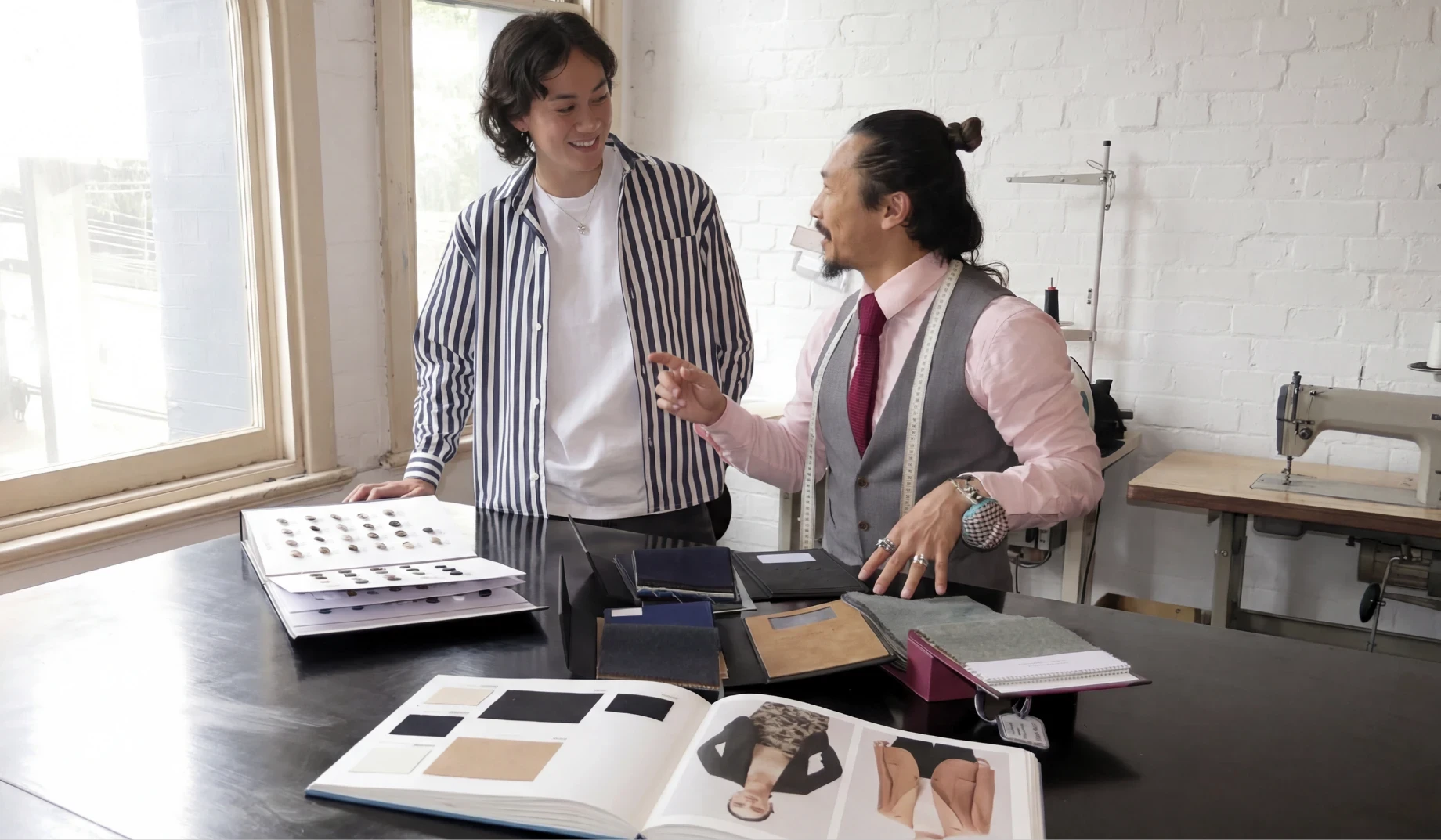
Isadora Nim's process involves three fittings, each designed to ensure your suit fits perfectly.
The Process:
First Fitting - We come to your home or office to take measurements. You'll choose fabric, add customizations, and discuss design details to make your suit truly unique.
Second Fitting - Your new suit is ready to be pinned and adjusted. We ensure it's exactly how you imagined, making any alterations necessary. The priority is ensuring you feel comfortable, confident, and empowered.
Third Fitting - The final delivery. Once you're happy with the fit, we wrap your made-to-measure suit in a 100% pure cotton bag. It's yours forever.
Lifetime Support - Should you require any future minor alterations, they're complimentary for the life of your suit. Your exact fit, as your body changes.
For athletic builds specifically:
The second fitting is where refinements happen. Shoulders fit from the first construction because they were measured specifically. But armhole depth, sleeve angle, and exact waist suppression placement get fine-tuned when you wear the actual garment and move naturally.
This three-fitting process ensures precision that rush services can't achieve.
What Changes When Suits Are Built For Your Body?
Shoulders that fit without sizing up everything else. Armholes that allow full movement without restriction. Waist definition created for your actual proportions, not imaginary curves. These aren’t subtle improvements over off-the-rack - it's the difference between compromising on fit every day and wearing clothing designed for how you're actually built.
Our Sydney trunk shows walk you through this process. You'll see fabric samples, understand which measurements change everything for athletic builds, and experience the difference between forcing your body into standard patterns versus having patterns built around you. One-hour consultations designed entirely for you.
10 appointments available February 13-14 at Meriton Suites, 528 Kent Street, Sydney CBD.