How to Dress a Queer Wedding Party in Coordinated Suits Without Matching

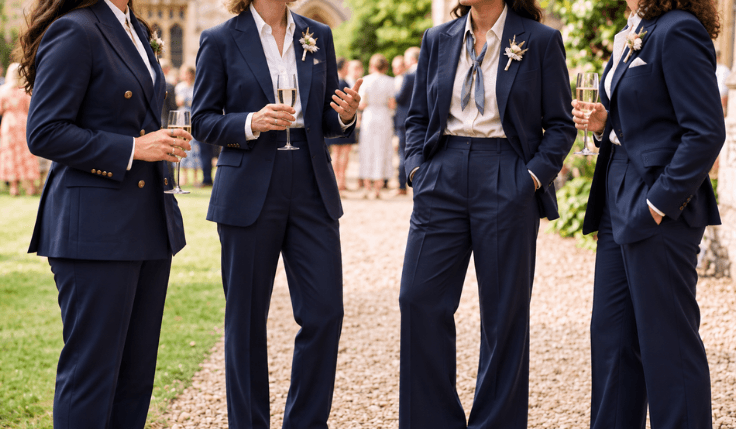
A queer wedding party does not need matching suits to look coordinated.
In fact, when a wedding party includes people with different body shapes, gender expressions and personal styles, putting everyone in exactly the same suit can create more problems than it solves.
One person may want a strongly masculine silhouette. Another may prefer something softer or more androgynous. Someone else may already own a suit they love.
The solution is not to make everyone wear the same thing.
It is to create a shared visual language.
Colour, cloth, formality and a few consistent details can make a whole wedding party look connected while allowing each person to choose a jacket and trouser shape that works for them.
How Do You Coordinate Suits for a Queer Wedding Party?
Start with a small number of things that everyone shares.
The simplest approach is:
Choose a colour or colour family.
Set the overall level of formality.
Decide whether the same cloth will be used.
Allow different jacket and trouser styles.
Fit each suit to the person wearing it.
Give the couple a subtle point of difference.
The more elements you try to match, the less flexibility everyone has.
A coordinated wedding party should look like a group, not a uniform.
Do Wedding Party Suits Have to Match?
No.
Wedding party suits do not have to match exactly to look cohesive.
You can coordinate a wedding party through:
colour
fabric
level of formality
shirt colour
button material
lapel width
one repeated accessory or detail
The jackets themselves can be different.
For example, everyone could wear navy wool while choosing between single-breasted and double-breasted jackets.
Or the jackets could share a similar shape while people choose different trouser widths and rises.
This approach is particularly useful for queer weddings because it avoids assigning people to traditional bridesmaid or groomsman categories simply because of gender.
Start With Colour and Cloth
Colour is usually the easiest starting point for a coordinated wedding party.
Choose the colour direction first, then decide how closely everyone needs to follow it.
Option 1: Everyone wears the same colour
A wedding party might all wear navy suits but use different jacket styles.
This creates an immediate connection while leaving room for individual choices.
Option 2: Everyone wears the same cloth
Using the same cloth across different suit styles can create an even stronger connection.
For example, everyone might wear the same navy wool while choosing different jackets and trousers.
Option 3: Use a colour family
Exact colour matching is not always necessary.
Different shades within the same family can work particularly well when there is enough difference between them to make each outfit distinct.
The important thing is to avoid colours that are so similar they look like an unsuccessful attempt to match.
How Much Should a Wedding Party's Suits Match?
A useful rule is to choose two or three shared elements and let the rest vary.
For example:
Shared:
navy cloth
formal level
white shirts
Different:
jacket construction
lapel style
trouser shape
accessories
Or:
Shared:
colour family
button material
overall formality
Different:
cloth
jacket style
trouser proportions
This gives the group enough consistency to photograph as a whole without taking away individual choice.
Can a Wedding Party Wear Different Jacket Styles?
Yes.
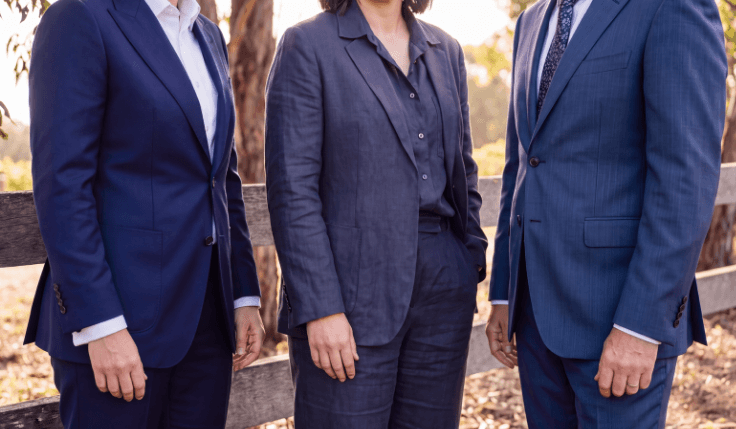
Different jacket styles can work together as long as the overall colour and level of formality remain consistent.
A wedding party could include:
single-breasted jackets
double-breasted jackets
notch lapels
peak lapels
different jacket lengths
waistcoats
more relaxed or more structured silhouettes
The important thing is that the differences look deliberate.
Adding a double-breasted suit
A double-breasted jacket can give one member of the wedding party a stronger silhouette without requiring everyone else to wear one.
The Isadora DB Jacket is one option for someone who wants more structure and visual presence.
The rest of the wedding party can wear simpler single-breasted jackets in the same colour or cloth.
This creates variation without losing the overall connection.
Can Wedding Party Members Wear Different Trousers?
Yes.
Trouser shape can be varied across a wedding party just as jacket shape can.
One person may prefer a wide-leg trouser while another feels more comfortable in a straighter cut.
The rise and length can also change according to the person's proportions.
These differences can be important because trouser proportions affect the balance of the entire suit.
A wider trouser can make a jacket appear more substantial.
A higher rise changes where the trousers meet the jacket and can alter the apparent length of the torso.
Rather than forcing everyone into one trouser pattern, choose a shape that works with each person's jacket and proportions.
How Do You Dress a Queer Wedding Party With Different Gender Expressions?
There is no requirement for everyone in a queer wedding party to dress with the same degree of masculinity or femininity.
One person might want a strongly masculine suit with:
a structured shoulder
wide peak lapels
a double-breasted jacket
a higher-rise trouser
Another might prefer a softer, more androgynous silhouette.
Someone else may want a relatively traditional suit with a simpler notch lapel.
All three can belong to the same wedding party.
The connection does not have to come from the cut.
It can come from the colour, cloth, formality or a shared detail.
For more ideas, see the guides to gender-fluid suits in Sydney and androgynous suits in Sydney.
What Is Gender-Neutral Wedding Party Attire?
Gender-neutral wedding party attire means choosing clothing based on personal style, fit and the desired overall look, rather than assigning outfits according to traditional gender categories.
For a suit-wearing wedding party, this can mean allowing everyone to choose from the same range of tailoring options.
Someone does not need to be designated a "groomsman" to wear a masculine suit.
Someone does not need to be designated a "bridesmaid" to wear a softer jacket.
The clothing can be chosen according to the person wearing it.
This gives the couple much more control over how the wedding party looks as a whole.
How Do You Fit Different Body Types in the Same Wedding Party?
The same suit cut will not look the same on every person.
Shoulder width, chest, waist, jacket length, sleeve length, trouser rise and leg width all affect the finished proportions.
This becomes particularly important when a wedding party includes people of very different heights and body shapes.
A jacket that finishes at the right point on one person may need a different length on another.
One person may need more room through the chest while another needs more room through the hips or thighs.
That does not mean the wedding party needs completely different aesthetics.
It means the tailoring needs to respond to the person wearing each suit.
The aim is not to make every person fit the same pattern.
The aim is to make the differences look intentional.
For more on proportion and fit, see the guide to plus-size tomboy outfits.
Should Everyone in the Wedding Party Have a Custom Suit?
No.
Not everyone in a wedding party needs a custom suit.
Some people may already own a suitable suit.
Others may buy a suit elsewhere and have it altered.
The easiest way to make this work is to establish the overall direction before people start shopping.
Decide:
the colour
the level of formality
whether there is a preferred fabric
whether shirts need to coordinate
whether there is a shared accessory or detail
Then each person can work within those parameters.
For example, the couple could have custom suits made while the rest of the wedding party wears navy suits they already own.
The jackets do not need to be identical.
If the colour and formality are consistent, the group can still look cohesive.
How Can the Couple Stand Out From the Wedding Party?
The couple does not need to wear completely different clothes from everyone else.
A small distinction is often enough.
The couple could wear:
a different shade of the same colour
a more formal cloth
a tuxedo
a more distinctive jacket
a different lapel
a shared detail that the wedding party does not use
If both partners are wearing suits, they can also coordinate with each other without matching.
One partner might wear a peak lapel while the other wears a notch lapel.
One might choose a waistcoat while the other keeps the jacket simpler.
The shared colour or cloth connects the two looks while the different construction gives each person an individual silhouette.
For more on this approach, see How to Coordinate Two Wedding Suits Without Matching.
What Should the Wedding Party Wear If the Couple's Suits Are Very Different?
Start with the couple's outfits.
If one partner is wearing a tuxedo and the other is wearing a lighter suit, the wedding party does not necessarily need to reproduce either look.
Instead, choose a colour and level of formality that sits comfortably between the two.
For example, the couple might wear different formal jackets while the wedding party wears a consistent navy or charcoal suit.
The wedding party becomes the visual background, while the couple remains distinct.
The important thing is to avoid introducing too many competing colours, textures or levels of formality.
What If Someone Does Not Want to Wear a Suit?
The same coordination principles can still work.
A wedding party does not have to consist entirely of suits.
A person might prefer a dress, jumpsuit or another form of formalwear.
In that situation, colour and level of formality become more useful than matching the construction of the clothing.
A dress can coordinate with suits through:
colour
fabric tone
accessories
one repeated detail
overall formality
The goal is the same: create a group that looks connected without requiring everyone to wear the same garment.
How Early Should You Start Planning Wedding Party Suits?
A larger wedding party needs more planning than one or two suits.
Start with the couple's outfits.
Then divide the wedding party into three groups:
Custom made:
People having suits made specifically for them.
Buying and altering:
People purchasing suits elsewhere and having them adjusted.
Existing suits:
People who already have something suitable.
Once you know which category everyone falls into, you can establish the common elements.
Starting early gives everyone enough time to order clothing, attend fittings and make final alterations.
This becomes particularly important when people are travelling from different cities or countries.
How Do Group Suit Fittings Work?
A wedding party does not necessarily need to attend one giant fitting together.
Each person can have an individual fitting based on their own measurements and preferences.
The shared decisions should be made beforehand:
colour
cloth
formality
jacket direction
trousers
any repeated detail
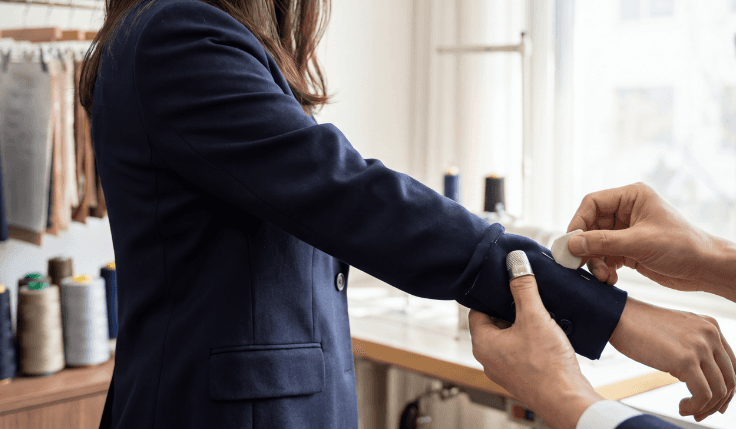
If you have never had a custom suit made, our guide to what happens at a custom suit fitting explains the process in more detail.
The important thing is to allow enough time between the first fitting and the wedding for the garments to be made and adjusted.
What Makes a Queer Wedding Party Look Cohesive?
A coordinated wedding party does not need identical suits.
Usually, five things are enough.
1. A shared colour or colour family
This gives the group an immediate visual connection.
2. A consistent level of formality
A formal wedding party should generally look formal as a group, even when the individual suits differ.
3. Different silhouettes
Allowing different jackets and trousers gives people room to choose what works for them.
4. Individual fit
Every suit should be fitted to the person wearing it.
5. A clear visual distinction for the couple
A different colour, cloth, jacket or level of formality can help the couple stand out in photographs.
The formula is simple:
Keep enough consistent that everyone looks connected. Keep enough different that everyone still looks like themselves.
Frequently Asked Questions About Queer Wedding Party Suits
Does everyone in a queer wedding party need to wear the same suit?
No. The wedding party can coordinate through colour, cloth, formality or another shared detail while allowing each person to choose a different suit style.
Can wedding party members wear different jacket styles?
Yes. Single-breasted, double-breasted, notch-lapel and peak-lapel jackets can work together when the colour and level of formality are consistent.
Can everyone wear different trousers?
Yes. Trouser rise, leg width and length can be adjusted to suit each person's proportions while keeping the overall wedding-party look cohesive.
Does a queer wedding party need traditional bridesmaid and groomsmen outfits?
No. Queer wedding parties can choose clothing based on personal style, gender expression, comfort and the overall look the couple wants.
Can a wedding party mix suits and dresses?
Yes. Colour, fabric tone and formality can connect different types of formalwear without requiring everyone to wear a suit.
Does everyone need a custom suit?
No. Some wedding party members can wear existing suits or buy suits elsewhere and have them altered. Establishing the colour and formality first makes this easier to coordinate.
How can the couple stand out from the wedding party?
A different shade, more formal fabric, tuxedo jacket or distinctive silhouette can create enough visual separation without making the couple look unrelated to the rest of the group.
How early should we start planning wedding party suits?
Start as early as possible when several people need custom tailoring. Allow time for individual fittings, production, alterations and any travel required for appointments.
The Goal Is Coordination, Not Uniformity
A queer wedding party does not need to follow the traditional division between bridesmaids and groomsmen.
It also does not need to choose between identical suits and completely unrelated outfits.
The strongest approach is usually somewhere between the two.
Choose the colour, cloth and level of formality first.
Then let each person choose the jacket and trouser shapes that work for their body, style and gender expression.
A double-breasted jacket can sit beside a single-breasted jacket.
A strongly masculine silhouette can sit beside a softer or more androgynous one.
A custom suit can sit beside an altered off-the-rack suit.
The group still works because the common elements provide the connection.
Good wedding-party tailoring does not remove individual differences. It makes those differences work together.
Explore Isadora Nim's wedding suits or book a consultation to plan coordinated tailoring for your wedding party.