Queer Weddings and the Suit Trade That Still Misses Them

Inclusive wedding tailoring starts with a simple change: stop asking which person is the groom.
For a queer couple, finding wedding suits should be straightforward. Both people should be able to choose the cut, cloth, silhouette and level of formality that suits them.
Yet much of the formalwear industry is still organised around an assumption that every wedding has a groom and a bride. That assumption can shape the appointment before a tape measure has even been picked up.
The difference becomes clear at the end of the second fitting: two people in half-made jackets, standing side by side, turning to see how they look together for the first time.
Getting there does not require a complicated approach. It starts with a fitting that never asks which one is the groom.
What makes wedding suit shopping difficult for queer couples?
Traditional formalwear appointments often begin by routing each client into either menswear or womenswear. The patterns, cuts, fabrics and styling options offered then follow that initial classification.
That can be limiting for same-sex couples, non-binary couples and anyone whose preferred silhouette does not correspond neatly with traditional menswear or womenswear.
A queer couple may want:
two traditionally masculine suits
two traditionally feminine or softer silhouettes
one structured suit and one softer suit
two completely different styles
suits that share details without matching
the same cloth in different cuts
different cloths that work together visually
None of those choices requires assigning either person the role of "groom" or "bride".
The more useful starting point is the individual: how do you want your suit to look, feel and function on your wedding day?
Why traditional suit patterns can create problems
The language of formalwear has become more inclusive, but the underlying pattern systems used to make many suits have often changed more slowly.
The two traditional approaches to suit patterns
A block is the base pattern from which a suit is drafted and adjusted.
Commercial blocks have historically been developed around conventional menswear and womenswear proportions. One may be based on a typically male torso, while another incorporates proportions associated with traditional womenswear before being adapted for jackets.
Neither approach was specifically designed around the range of bodies, identities and silhouettes that can appear in a queer wedding.
That matters because choosing a block based on gender can introduce fit problems before the individual client's proportions have been considered.
Where gendered assumptions create fit problems
Consider a client with a traditionally masculine presentation and a fuller chest who wants a strong, clean silhouette.
Routing them automatically to a menswear block may create enough room through the chest but also introduce unnecessary width through the shoulders.
The opposite can happen with someone with a traditionally femme frame who wants a square shoulder and more structured jacket. A womenswear-derived block may introduce a rounded shoulder shape when the desired result is architectural and straight.
These are not problems that can always be solved by simply choosing "the other" block.
An individual pattern gives the tailor more freedom to work from the client's actual proportions rather than from a gender category.
For more on this approach, see our guide to gender-fluid and inclusive suits in Australia.
The market for queer wedding suits is bigger than the headline number
Same-gender and non-binary marriages represent a meaningful part of the Australian wedding market.
The proportion of marriages involving same-gender couples and non-binary people does not, however, tell the whole story of the market for inclusive wedding tailoring.
There are several reasons.
Gender is not always captured cleanly in official wedding data. Gender became optional on the Australian marriage form in 2021, and the number of couples leaving the gender fields blank has subsequently increased.
One wedding can mean two suit commissions. When both partners want custom tailoring, a single wedding can generate two commissions. Looking only at the percentage of weddings therefore understates the potential demand for wedding suits.
More importantly, the opportunity is not simply about market size. It is about whether a formalwear business has designed its process to accommodate people who do not want their clothing choices determined by a gendered wedding template.
How do you make two wedding suits work together?
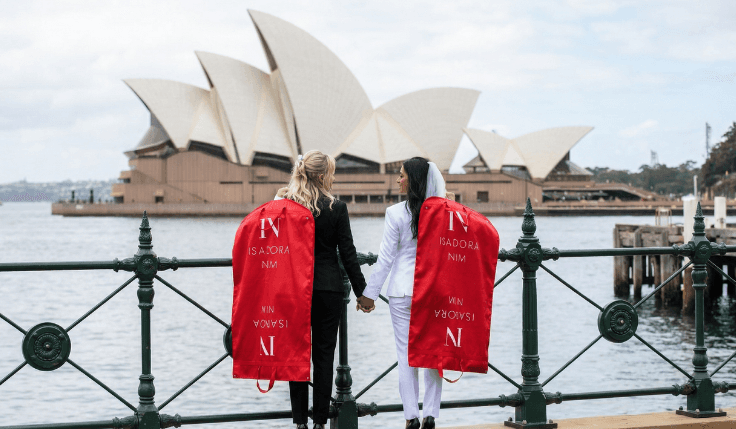
Two wedding suits do not need to match.
In fact, identical suits can sometimes make a couple look less considered because the same cut does not necessarily flatter two different bodies or reflect two different personalities.
The better approach is to find a visual relationship between the suits.
Four design decisions can make a particularly noticeable difference.
1. Shoulder line
The shoulder line has a major effect on the overall silhouette.
If both jackets have a similarly deliberate shoulder treatment, they can look cohesive even when the cuts are otherwise different.
2. Lapel width
Lapel width is another detail that connects two jackets visually.
Two dramatically different lapel widths can make the suits look as though they were selected independently. A shared or complementary width creates a stronger relationship.
3. Button stance
Button stance changes the proportions of a jacket and where the eye is drawn on the torso.
Two jackets can therefore feel very different even when they use the same cloth. Conversely, a similar button stance can help different cuts feel connected.
4. Depth of the V
The depth of the jacket opening affects the apparent length and proportions of the torso.
A deeper V and a more closed front can work beautifully together, provided the difference looks deliberate rather than accidental.
The goal is not to make two people look identical.
The goal is to make the two suits look as though they belong in the same photograph.
Should queer couples wear matching wedding suits?
Usually, no.
A couple can create a coordinated wedding look without wearing identical suits.
A useful starting point is to choose one or two shared elements, then allow the remaining details to respond to each person's body and preferences.
Shared elements might include:
cloth colour
fabric family
lapel width
shirt colour
button colour
trouser cloth
level of formality
The cuts can then differ.
This is particularly useful when one person prefers a notch-lapel single-breasted jacket and the other wants a double-breasted jacket, or when one wants a softer silhouette while the other wants something sharply structured.
Coordination is more useful than matching.
How fabric changes the way two suits look in wedding photographs
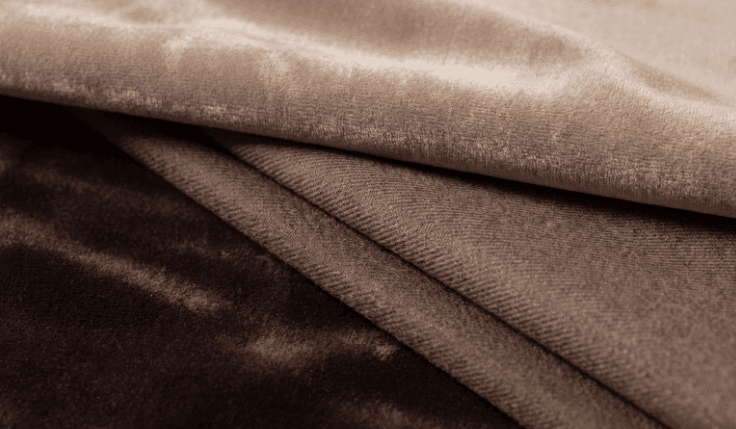
Fabric does more work in a wedding photograph than many couples expect.
A photographer's light does not fall on each suit independently. It hits both people in the same frame, making differences in texture, sheen and colour particularly visible.
Velvet versus worsted wool
Velvet has a raised pile that absorbs and scatters light differently from a smooth wool cloth.
A velvet such as Catriona Velvet can therefore appear deeper in colour than it did as a studio swatch, while its surface texture can soften the appearance of the shoulder.
A smooth worsted reflects light more directly. Highlights can travel along the shoulder seam and lapel edge, keeping the silhouette crisp.
That difference can be useful.
Instead of trying to make two suits identical, pairing contrasting textures can make their relationship more obvious in photographs.
For example, velvet and a smooth worsted can share a colour family while producing distinctly different responses to light.
Single-breasted versus double-breasted wedding suits
The same principle applies to jacket construction.
A notch-lapel single-breasted jacket creates a relatively open, elongated V through the chest.
A double-breasted jacket closes across more of the torso and creates greater visual emphasis through the front.
Neither silhouette is inherently more masculine, feminine or appropriate for one partner.
They are simply different design choices.
Both can work beautifully for a queer wedding when they reflect the person wearing them and have enough visual connection to work as a pair.
Why double-breasted suits need careful fitting
A double-breasted jacket has an additional layer of cloth crossing the front of the body.
On a fuller chest, insufficient front balance can cause the overlap or hem to pull open during movement.
Front balance refers to the relationship between the length of the jacket front and the back. Adjusting that balance can allow the jacket to hang cleanly rather than pulling open.
This is one reason an individual pattern and proper fitting process matter more than simply selecting a standard size.
The relevant question is not whether a body fits a particular gendered block.
It is whether the jacket has been drafted and adjusted for that body.
What should a tailor ask a queer couple at a wedding suit fitting?
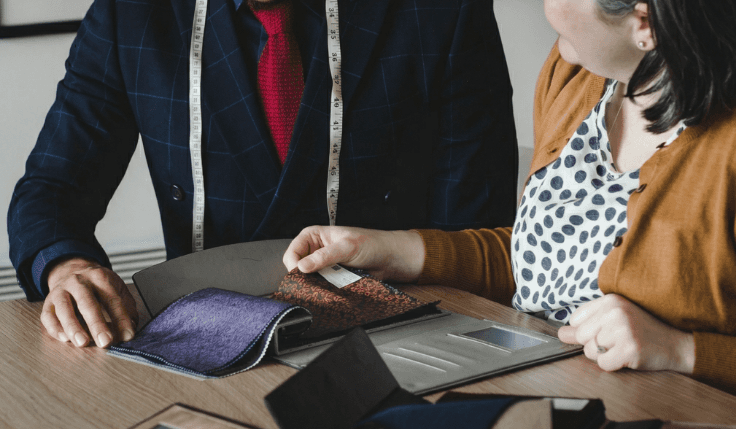
Take the gendered routing out of the appointment and something more useful has to replace it.
At Isadora Nim, the starting point is three questions:
Where will you wear the suit?
What has never fitted properly before?
What does the suit need to do on the wedding day?
The third question can have a surprisingly large effect on construction.
Someone planning to dance until midnight needs a different level of movement and comfort from someone expecting to spend most of the day standing for photographs.
That can influence decisions such as:
armhole height
trouser rise
jacket length
cloth weight
ease through the body
trouser construction
mobility through the shoulders
The point is not simply to make a suit that looks good while standing still.
It is to make a suit that works for the person wearing it.
For a detailed explanation of the process, see what actually happens at a custom suit fitting.
What should queer couples bring to a wedding suit consultation?
The first appointment does not require a perfectly formed idea of the finished suit.
Useful things to bring include:
the wedding date
the venue
photographs of suits or outfits you like
photographs of suits that have fitted badly in the past
shoes, if already chosen
ideas about how formal you want the wedding to feel
A photograph of a badly fitting suit can sometimes be more useful than a collection of photographs of suits you like.
It tells the tailor what has not worked before.
That information can help determine the pattern, proportions and construction of the new suit.
Frequently asked questions about queer wedding suits
Can a same-sex couple get matching wedding suits?
Yes, but matching is not necessary.
Many couples get a more considered result by choosing one or two shared elements—such as colour, cloth or lapel width—while allowing each suit to have its own cut and proportions.
Do both people need to choose the same style of suit?
No.
One person can wear a single-breasted suit while the other wears a double-breasted jacket, for example. Different silhouettes can work together when their proportions and design details are considered as a pair.
Can a non-binary person have a suit made without choosing menswear or womenswear?
Yes.
Custom tailoring can begin with the individual client's measurements, proportions and desired silhouette rather than requiring them to choose a gendered category first.
What if neither partner has ever had a suit that fits properly?
That is a common starting point.
Previous fit problems are useful information. A tailor can ask what has pulled, sagged, felt restrictive or looked wrong in previous suits and use those observations when developing the new pattern.
Can we bring each other to the fitting?
Yes.
Having both partners involved can be particularly useful when decisions need to be made about how the two suits will look together.
What happens if my body changes before the wedding?
A well-made custom suit can often be altered as the wearer's body changes.
That is one reason to think about the suit as clothing intended to have a life beyond the wedding rather than as a one-day costume.
How long does it take to have wedding suits made?
Allow enough time for both the tailoring process and the couple's decisions about cloth, cut and details.
At Isadora Nim, typical timelines are:
Melbourne studio: approximately 6–8 weeks from the first fitting.
Sydney or Auckland trunk show: approximately 8–12 weeks, allowing for the travel schedule between fittings.
There are typically three fittings between the first appointment and the finished suit.
For couples commissioning two suits, it is worth allowing additional time for shared design decisions. Agreeing on cloth and complementary details can take longer than choosing a single suit independently.
Current dates for Sydney and Auckland trunk shows are published as they are confirmed.
What should an inclusive wedding suit fitting feel like?
It should feel like a conversation about clothing, not a process of determining which role each person occupies in the wedding.
Nobody should have to explain whether their preferences belong in traditional menswear or womenswear before they can talk about how they want their jacket to look.
Nobody should have to choose the "groom's" suit or the "other" suit.
The useful questions are simpler:
What do you want to wear?
How do you want it to fit?
How do you want the two suits to work together?
Start there and the tailoring process becomes much more straightforward.
At the end of the second fitting, the jackets are still half-made. There is still work to do.
But the couple can already see the idea.
Two different suits. Two people who can move in them. A shared visual language without either person being assigned a role.
That is what inclusive wedding tailoring should look like.
Book a consultation with Peter and bring the wedding date.