Which Suit Colour Actually Works for Your Industry?

Best Suit Colours for Work in Australia: Navy vs Charcoal vs Black
Quick Answer
The best suit colour for work depends on your industry and environment:
Navy: Best for law, courtrooms, and client-facing roles (trustworthy, balanced)
Charcoal: Best for tech, consulting, and creative industries (flexible, modern)
Black: Best for finance, boardrooms, and senior leadership (authoritative, precise)
If you’re unsure, start with the room you are in most often—not personal preference.
Why Suit Colour Matters More Than You Think
At almost every corporate fitting, the first real question is not about lapel shape or fabric. It is: which colour?
After fitting hundreds of professionals across Melbourne and Sydney—from barristers heading into court to product leads pitching investors—the answer is consistent:
It depends on the room.
Not personal preference. The room.
There is research behind this. The concept of enclothed cognition shows that what you wear influences both how others perceive you and how you perform. In professional settings, colour is the first signal a room reads—before fit, fabric, or cut.
For women, non-binary, and gender-diverse professionals, this matters even more. Dress codes were historically built around men’s wardrobes. Choosing the right colour removes friction before you speak.
Quick Reference: Suit Colours by Industry
Colour | Best Room | What It Signals | Avoid |
Navy | Courtrooms, client meetings | Trustworthy, approachable | Royal blue shades read as fashion, not profession |
Charcoal | Tech, consulting, creative industries | Sharp, flexible, easy to work with | Low-quality fabric looks flat under office lighting |
Black | Finance, senior leadership, boardrooms | Precise, authoritative, decisive | Too rigid for creative or collaborative rooms |
Does suit colour actually make a difference at work?

Yes, and there is solid research behind it. In 2012, psychologists Hajo Adam and Adam Galinsky published a study on what they called enclothed cognition in the Journal of Experimental Social Psychology. Their finding: the clothes you wear change how you think and behave, not just how others see you. The symbolic meaning of a garment does real psychological work once you are physically wearing it.
For professional dress, colour is the first signal a room picks up. Before anyone can assess your fabric, your fit, or your lapel choice, they have already formed an impression. That impression follows industry conventions that have built up over decades, and those conventions differ between law, tech, and finance.
This matters more than people expect, particularly for women, non-binary, and gender-fluid professionals in Australia. Professional dress has historically been built around men's wardrobes. Knowing which colour fits the room means you walk in with one less thing to overcome.
Best Suit Colour for Courtrooms (Australia)
Courtrooms run on trust. Whether at the Downing Centre in Sydney or the Supreme Court in Melbourne, credibility is everything.
Navy is the best suit colour for legal environments.
Why:
Reads as capable without being aggressive
Warm undertone supports negotiation and mediation
Holds colour under mixed courtroom lighting
What Shade of Navy Works Best?
Mid to deep navy
Avoid bright or royal blues (read as fashion, not profession)
Fabric and Fit Guidelines
Fabric: Worsted wool (250–280gsm)
Structure: Holds shape through long hearings
Fit: Allows movement when standing, sitting, turning
High-quality mills like Vitale Barberis Canonico produce suiting fabrics designed for durability across climates—from Brisbane humidity to Canberra winters.
Best Suit Colour for Tech and Creative Offices

Tech environments operate differently to law or finance.
From Atlassian to Canva and smaller scale-ups across Melbourne and Sydney, the emphasis is on flexibility and adaptability.
Charcoal is the most effective suit colour in these environments.
Why:
Works across formal and informal settings
Performs well on video calls
Pairs easily with a wide range of shirts and textures
Black often misfires here—it reads as too rigid in a culture that values ease.
Is Charcoal Good for Gender-Neutral or Non-Binary Dressing?
Yes—charcoal is the most versatile option.
It creates a neutral base that:
Adapts to styling choices
Avoids strong gender coding
Balances structure with softness
At Isadora Nim, many non-binary clients in creative and tech roles choose charcoal for this reason—it allows the outfit to reflect the individual, not a category.
Read more: The Best Tailor for Gender-Neutral Fashion in Australia
Best Suit Colour for Finance and Boardrooms

Finance operates on precision.
From major banks to investment firms and executive environments, small details carry weight.
Black is the strongest suit colour for finance and senior leadership roles.
Why:
Signals authority immediately
Removes ambiguity
Keeps focus on what you are saying
For women and gender-diverse professionals, this can also function as a way to claim authority within traditionally male-coded environments.
Fit Matters More in Black
Black amplifies precision—but also exposes flaws.
Key fit points:
Shoulder seam ends exactly at your shoulder
Jacket lies flat across the chest
Trousers have a clean break (half or no break)
Double vents improve movement when seated
In black, imprecision is visible from across the room.
Can You Wear the Same Suit Colour Across Different Jobs?

Yes—but each colour has a primary environment.
Navy can extend into finance, especially client-facing roles
Charcoal works across consulting and hybrid industries
Black struggles outside formal, structured environments
What doesn’t work is mismatch:
Charcoal in court → too casual
Black in tech → too rigid
How Suit Colour Works for LGBTQ+ and Gender-Diverse Professionals
The colour rules don’t change—but the starting point does.
At Isadora Nim, the process begins without assumptions:
You define what the suit should communicate
Colour, cut, and silhouette follow from that
A private, made-to-measure fitting allows:
Precise control over presentation
Clothing that aligns with identity and environment
A result built from your brief—not a standard template
How to Choose the Right Suit Colour
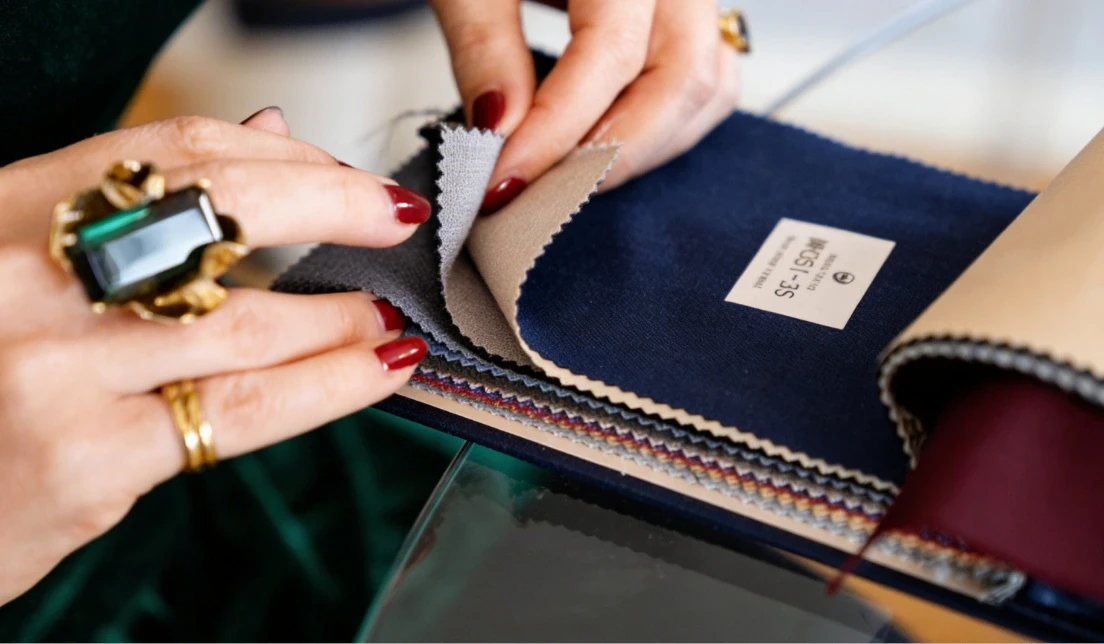
Start with one question:
Where do you spend most of your professional time?
Legal environments → Navy
Tech / creative → Charcoal
Finance / leadership → Black
Then consider fit.
A well-chosen colour only works if the suit is cut correctly. A made-to-measure garment holds its shape and intention in a way off-the-rack tailoring cannot.
Why Fit and Fabric Matter as Much as Colour
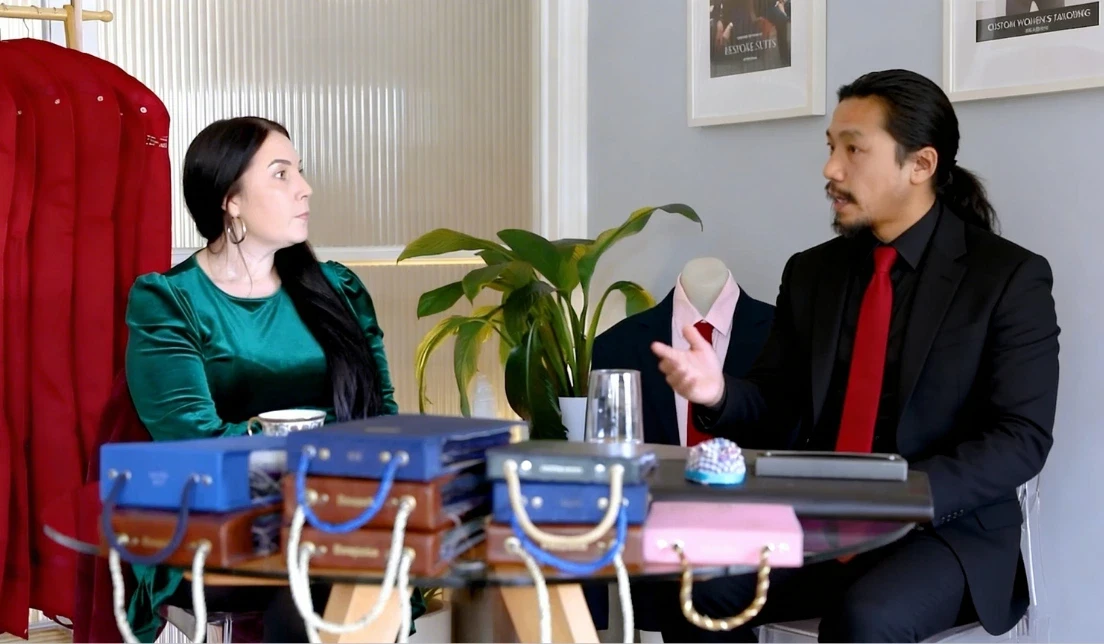
Colour gets you into the room.
Fit determines how you are read once you’re there.
A suit made from high-quality worsted wool:
Holds structure over long days
Maintains colour depth
Performs across climates
A suit cut from your measurements:
Eliminates pulling and imbalance
Improves comfort
Keeps the silhouette clean
FAQ: Suit Colours for Work
What is the most professional suit colour?
Navy is the most versatile and widely accepted professional suit colour across industries.
Is black too formal for work?
Black works best in finance and leadership roles but can feel too rigid in creative or tech environments.
Can you wear charcoal in court?
Charcoal is acceptable but less traditional than navy in legal settings.
What colour suit is best for women in corporate roles?
Navy and charcoal are the most flexible options, depending on industry.
Book a Custom Suit Consultation
If you want a suit that works in your specific professional environment, a consultation at Isadora Nim is the best place to start.
Melbourne studio (Carlton North)
Sydney trunk shows (Quarterly)
Private, one-on-one fittings
Lead time is 6–8 weeks, so getting started early ensures the best result.
Book at isadoranim.com/scheduling.