The Details That Say Who You Are, From Lapel to Waistcoat to No Tie

When you are choosing a wedding suit, the main decisions are usually easy to name. Colour. Fabric. Jacket style.
The smaller details can be harder to decide.
Should you wear a peak or notch lapel? Do you need a tie? Would a waistcoat make the suit look more finished, or simply add another layer?
These choices change the proportion and formality of a suit. They also give you a way to make the same basic suit feel very different.
For couples choosing wedding suits, that can be useful. You do not have to wear identical suits to look like you belong together. You can make different choices while keeping the overall level of formality consistent.
If you are still working out which overall wedding suit style suits you, our guide to the top styles of wedding suits for women covers the bigger decisions around lapels, fabric, configuration and wedding setting.
Start With the Lapel
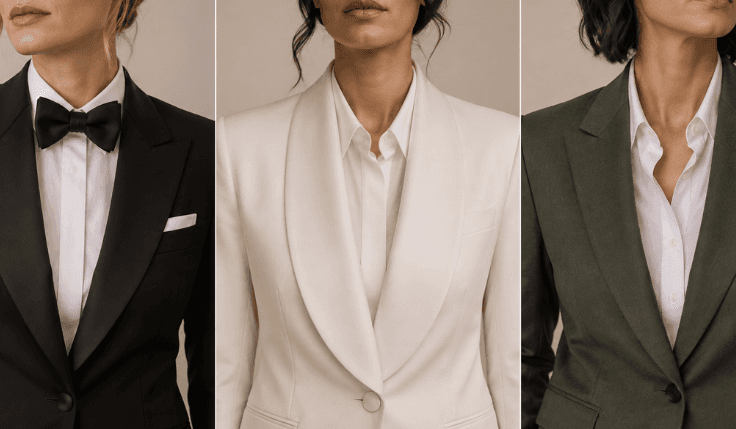
The lapel is one of the first details to consider because it changes the character of the jacket.
There are three common options: notch, peak and shawl.
Peak lapel
A peak lapel has points that extend upwards towards the shoulder.
It has a more formal appearance than a standard notch lapel and works particularly well when you want the jacket to have a stronger presence.
The Atalanta Peak is one example of this shape in the Isadora Nim collection.
Best for: a more formal wedding suit, stronger shoulder definition or a more traditional tailoring look.
Lapel width matters too. A narrow peak lapel can look very different from a wide one, even when the rest of the jacket is unchanged.
The width should relate to the jacket and the person wearing it. A very wide lapel can overwhelm a smaller frame, while a narrow lapel may look out of proportion on a larger jacket.
For a closer look at how lapel width affects a masculine silhouette, see our guide to masculine suit styles for women.
Shawl lapel
A shawl lapel has a continuous curved line from the collar into the front of the jacket.
It is most closely associated with eveningwear and tuxedos, but the softer line can also work when you want formal tailoring without a sharp peak.
The Freya Shawl is one of the wedding jacket options in the Isadora Nim collection.
Best for: evening weddings, tuxedo inspired looks or anyone who prefers a softer jacket line.
Notch lapel
A notch lapel is the most familiar option.
The collar meets the lapel in a small notch, creating a simpler line through the upper chest.
It works well when you want the rest of the outfit to do more of the talking.
Best for: versatile wedding suits, daytime weddings and outfits where the fabric, shirt or accessories are the main feature.
The Freya Notch Blazer is one of the more versatile examples in the Isadora Nim range and can work beyond the wedding day as well.
The Detail That Matters: Lapel and Body Proportion
The best lapel is not simply the one you like in a photograph.
It needs to work with the proportions of the jacket and your body.
Look at the width of the lapel alongside the shoulder line, chest and jacket length. These details need to feel balanced.
This becomes particularly important when two partners are standing together.
You can choose different lapel styles. The jackets do not need to be identical.
But if one suit has a very strong peak lapel and the other is deliberately minimal, the difference should look intentional.
What Happens When You Take the Tie Off?
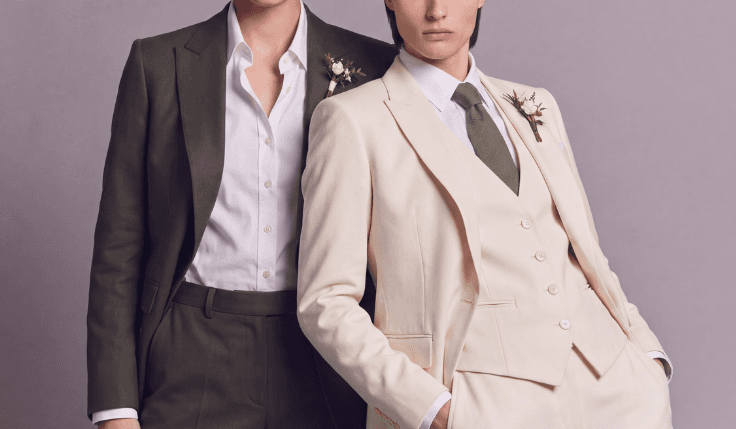
A tie is not just an accessory.
It fills the space between the shirt collar and jacket lapels. Remove it and the shirt collar, top buttons and lapel become much more visible.
That can make a suit feel less formal, but it does not automatically make it casual.
The rest of the jacket still determines much of the look.
A structured jacket in a formal cloth can look polished with an open collar. A relaxed jacket in a casual fabric will feel very different.
If you are considering a suit that needs to work across the whole wedding day, our guide to custom suit fittings explains how fabric, jacket construction and design details are considered during the fitting process.
Open collar
If you are not wearing a tie, pay more attention to the shirt collar.
A collar that collapses under the jacket can make the outfit look unfinished. A well structured collar will sit neatly against the neck and support the shape of the lapel.
The collar also needs to work with the jacket.
If the lapel is wide and structured, a very small shirt collar can look out of proportion. The same applies in reverse.
Claire had her bridal suit and shirt made together, allowing the two pieces to be considered as one outfit.
Bow tie
A bow tie creates a clear focal point at the neck.
It works naturally with a tuxedo, particularly when the jacket has a satin or grosgrain faced lapel.
The Isadora Tuxedo Jacket uses a peak lapel with satin detailing and is designed specifically for weddings and other formal events.
Best for: black tie weddings, evening ceremonies and a deliberately formal look.
Long tie
A long tie creates a strong vertical line through the centre of the jacket.
It is the most familiar option for business and formal daywear, so the choice of fabric and jacket style becomes important if you want the suit to feel distinctly wedding appropriate.
It can also be useful when you want to create more visual length through the torso.
Do You Need a Waistcoat?
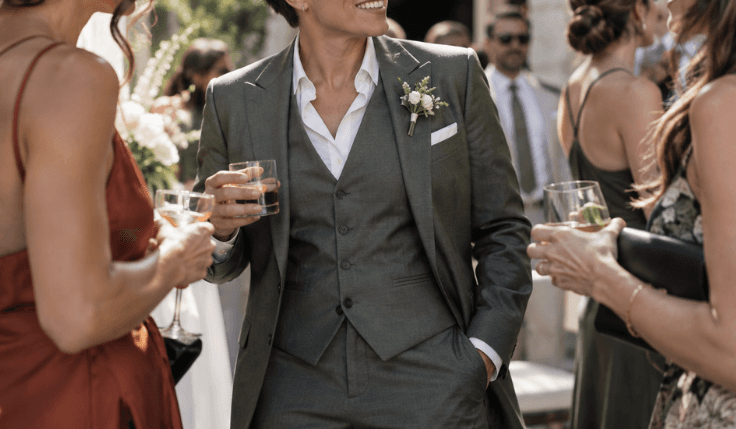
A waistcoat changes the front of a suit more than most other accessories.
It fills the space between the shirt and jacket and creates another horizontal line across the body.
It can be useful when a jacket will be worn open during the reception because it keeps the outfit looking complete without a tie or closed jacket.
But it is not necessary for every suit.
Isadora Nim's waistcoat and vest collection includes several options that can be made to work with a wedding suit.
A waistcoat works particularly well with
An open single breasted jacket
The waistcoat fills the space beneath the jacket and gives the outfit more structure.
A longer torso
The horizontal line across the waist can help break up the length of the body.
A simple jacket
If the jacket has a straightforward notch lapel, the waistcoat can become the main detail.
You may not need one with
A double breasted jacket
The front of the jacket already provides plenty of structure, and most of the waistcoat will be covered.
A strong lapel
A wide peak or faced shawl lapel already creates a strong focal point. Adding a waistcoat can make the front of the outfit feel busy.
A summer wedding
A third layer adds warmth. If you expect to spend a lot of the day outside or dancing at the reception, comfort needs to be part of the decision.
How to Put the Details Together
The easiest way to avoid an overworked wedding suit is to decide which detail should lead.
If the jacket has a strong peak lapel, you may not need a statement waistcoat or elaborate neckwear.
If the jacket is simple, the waistcoat or shirt can provide more interest.
The same principle applies when two partners are choosing suits.
You might have one partner in a peak lapel and bow tie while the other wears a notch lapel with an open collar. They can still look coordinated if the fabric, colour and level of formality connect the two outfits.
The details do not need to match.
They need to make sense together.
For more on choosing different suit styles for two people at the same wedding, see our guide to wedding suits for women.
What About the Other Partner?
There is no rule saying both partners should make the same choices.
One person might prefer a tuxedo with a shawl lapel and bow tie. The other might feel more comfortable in a single breasted suit with a notch lapel and open collar.
This is particularly useful when two people have different approaches to formalwear.
Rather than forcing both suits into the same configuration, start with the person wearing each suit.
Then look at the two outfits together.
The wedding suit collection includes different jacket styles that can be used as a starting point for this approach.
Frequently Asked Questions
Which lapel is most formal?
Peak and shawl lapels are generally more formal than notch lapels, particularly when used on eveningwear. The fabric, jacket construction and styling also affect the overall formality.
Can we wear different lapels at the same wedding?
Yes. Different lapel styles can help each partner have their own look while still coordinating through colour, fabric or formality.
Can I wear a suit without a tie to my wedding?
Yes. If you choose an open collar, pay attention to the shirt collar and the way it sits beneath the jacket.
Do I need a waistcoat?
No. A waistcoat is useful when you want another layer or plan to wear the jacket open, but it is not required for a formal wedding suit.
Can I wear a waistcoat with a double breasted jacket?
You can, but it is rarely necessary. The double breasted jacket already provides substantial structure across the front.
Should both partners wear the same suit details?
No. The suits can be different. The important thing is that the overall proportions, fabric and level of formality work together.
Choosing the Details at Your Fitting
Lapel, shirt collar, tie and waistcoat are not separate decisions.
They affect each other.
Start with the jacket. Decide how formal you want it to feel, then choose the shirt and neckwear around it. Add a waistcoat if the outfit benefits from another layer.
This approach gives you a suit that feels considered without adding details simply because they are available.
For couples, it also leaves room for two different personalities.
You can choose different lapels, different neckwear or no tie at all, while still creating two wedding suits that work together.
If you are still deciding on the right combination, book a free consultation with Isadora Nim to discuss the jacket, fabric and details that will work for you.